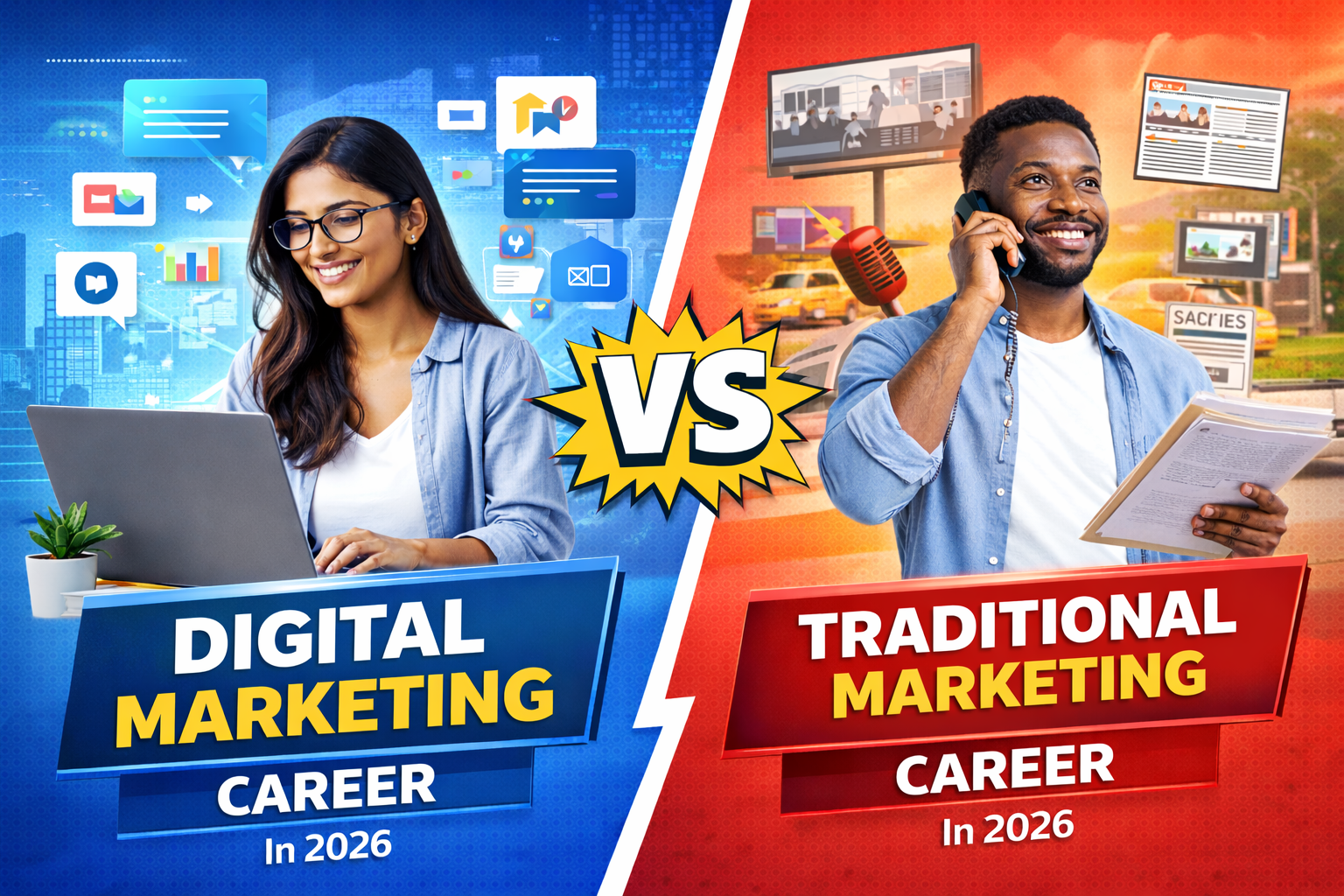

Choosing a career has never been easy, but it gets more critical in today’s fast-changing world. Many students and professionals compare two of the most major paths — Digital Marketing vs Traditional Marketing Career options. While both deal with brand or product promotions, they differ in terms of mode of action and future prospects.
As we near 2026, technology is shaping careers in marketing, with consumer behavior changing and new business models emerging. One such question at Briwon Academy is: which Digital Marketing vs Traditional Marketing Career is better for the long haul?
This blog looks practically at Digital Marketing vs Traditional Marketing Career: Which Career Is Better in 2026? It will give you clear insight into their differences, growth opportunities, and future scope.
Understanding the Basics of Digital Marketing v/s Traditional Marketing
Before comparing either career, we must understand what each field actually means.
Digital Marketing
Digital marketing means product or service advertising on online platforms such as:
- Search engines
- Social media
- Websites
- Online advertisements
Skills include: search engine optimization (SEO), Google Ads, social media marketing, content marketing, analytics, and automation.
Traditional Marketing
Traditional marketing works through offline channels like:
- Newspapers
- TV
- Radio
- Hoardings or billboards
- Flyers and brochures
This sort of marketing is more mass communication focused on brand visibility by either physically or through broadcast media.
Both work to sway the customer, but their operating environments are entirely different.
Digital Marketing v/s Traditional Marketing Career Demand In 2026
Demand is one of the bigger factors that go into choosing a career.
Career Demand for Digital Marketing
Most of the businesses by 2026-whether small or large-are very likely to set up an online presence. So the demand for professionals who can do the following will remain:
- Improve online visibility
- Generate leads online
- Analyze customer behavior
- Run data-based campaigns
Digital marketing opportunities are growing across sectors like IT, health, education, finance, e-commerce, and real estate.
Career Demand for Traditional Marketing
Traditional marketing jobs are still there but grow at a much slower pace. A sizeable portion of marketers are slicing offline budgets and pulling back funding to digital marketing efforts.
Traditional marketing may never disappear, but the incursion of new roles will be markedly lower compared to digital marketing.
Digital Marketing v/s Traditional Marketing, Skill Sets Needed for Digital Marketing Jobs
Skills Needed in Digital Marketing Careers
Digital marketing careers are skill-oriented. The employers value:
- Practical knowledge
- Tool knowledge
- Analytical thinking
- Creativity with data
Skills can be learned, refined, and modified over time.
Skills Needed in Traditional Marketing Careers
Traditional marketing depends more on:
- Communication
- Creativity
- Understanding of the brand
- Experience-based learning
While these are valuable skills, they are hard to quantify and take time to upgrade.
This is what makes digital marketing more accessible for freshers and career switches.
Digital Marketing vs Traditional Marketing Career Development Options
Growth Opportunities in Digital Marketing
Digital marketing provides according to various options for growth:
- SEO Specialist → SEO Manager → Growth Head
- Ads Executive → Performance Marketing Manager
- Content Marketer → Brand Strategist
- Freelancer → Consultant → Agency Owner
Growth is based mostly on performance rather than duration with respect to time.
Career Growth in Traditional Marketing
Traditional marketing growth is by and large rather slow and hierarchical:
- Executive → Senior Executive → Manager → Head
Growths are evaluated based on years of experience instead of measurable performance.
Digital Marketing vs. Traditional Marketing Career: Salary and Income Potential
Salary Earned in Digital Marketing Jobs
The base figures for digital marketing salaries explode with experience and skills. These professionals specializing in the niche skills of paid ads, analytics, or automation frequently experience considerable growth in their wages.
The increased emergence of freelancing coupled with global remote work raises the probability of one’s earning potential.
Salary in Traditional Marketing Careers
Traditional marketing salaries are mostly stable but very slow in the increase. Freelancing opportunities are very few, and the status of income is determined by the company structure.
By 2026, it is predicted that digital marketing will have better income flexibility.
Digital Marketing vs. Traditional Marketing: Flexibility and Work Styles
Work Flexibility in Digital Marketing
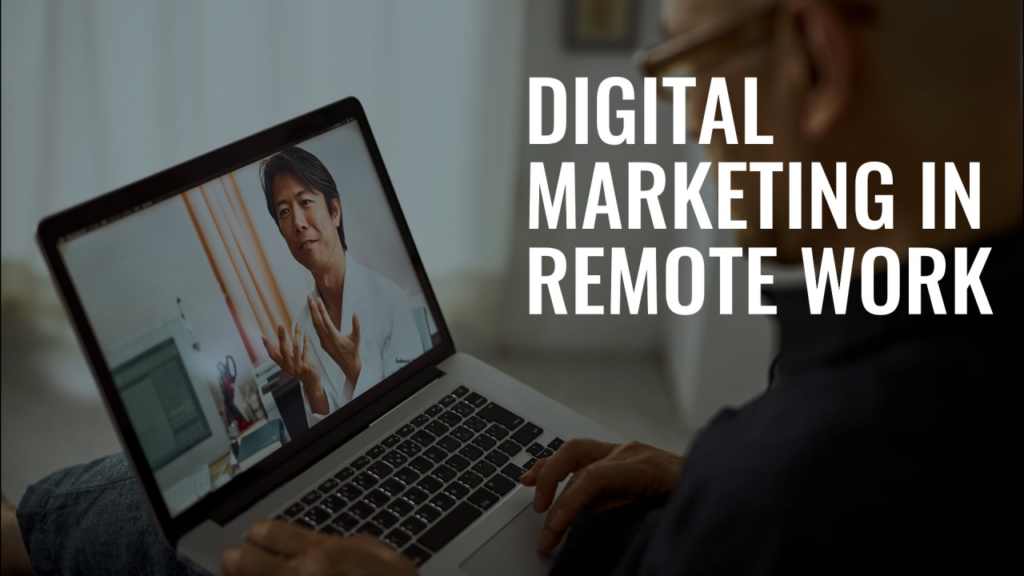
Digital marketing allows you to do the following:
- Remote work
- Freelancing
- Global clients
- Flexible schedules
This is very attractive to young professionals and those seeking work-life balance.
Work Flexibility in Traditional Marketing
Most traditional marketing jobs are done from offices and are location-dependent, meaning flexibility is minimal compared to digital roles.
Digital Marketing vs Traditional Marketing: Job Security
Job Security in Digital Marketing
As long as businesses have their work done on the internet, the digital marketing skills are usually alive and fresh in demand. Professionals that keep learning their trade remain sought after.
Job Security in Traditional Marketing
Traditional marketing is susceptible to budget cuts and shifts in the media. Some positions are evolving into niche or specialized roles rather than mainstream ones.
Digital Marketing vs Traditional Marketing: Barriers to Entry
Enter into a Digital Marketing Career
Digital marketing is generally easy to enter.
There is no specific degree requirement.
Skills matter much more; background does not.
There are many short courses and certifications that are being offered.
Institutes like Briwon Academy are focusing on preparing students for job-readiness through practical training.
Enter into a Traditional Marketing Career
Generally, traditional marketing entails:
- Formal degrees.
- Entry through internships.
- Slower initial growth.
This forms hurdles for career switchers.
Digital Marketing Vs. Traditional Marketing Measurable Results
Digital marketing provides marketers the option to:
- Evaluate performance based on results
- Track ROI
- Enhance performance using data
On the other hand, the impact of traditional marketing is often vague and brings difficulties in assessing it against any metrics, possibly affecting one’s career growth and recognition.
Which Among the Two Careers Is Better in 2026: Digital or Traditional Marketing?
Digital Marketing is that – Digital Marketing vs. Traditional Marketing. Well, the answer really depends on the future you want
However, if you want:
- Progress in Career Within Breakneck Speed
- Skill-wise Development
- Flexibility with Global Prospects
- Strong Demand Across Industries
Then Digital Marketing will suit you. Traditional marketing may, however, be suited for a few that tend to like the following:
- Branding off the digital market
- Long-term jobs at corporate levels
- Creative storytelling via mass media
But clearly, in 2026, digital marketing will obviously boast stronger career prospects in terms of scope, flexibility, and opportunity.
Why Students Are Choosing Digital Marketing in 2026
This is why digital marketing became the first choice for many students:
- It goes along with the business theory that companies follow nowadays
- Skills remain aligned across various industries
- It is practical and outcome-oriented learning
At Briwon Academy, students are not just taught the tools but also about long-term planning for their careers in digital marketing.
The Role of Training in Choosing the Right Career
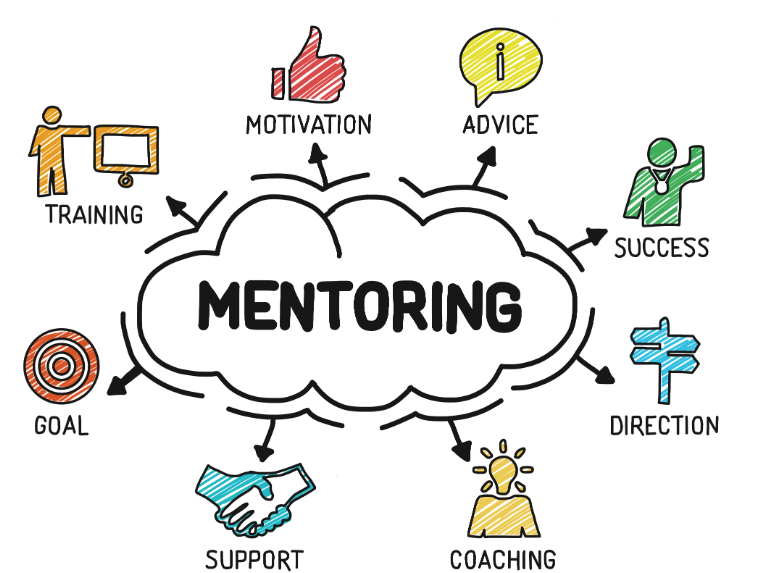
A good institute can decide the way in which one can enter the industry in an easy way. Real-time exposure, mentoring, and live projects all contribute largely toward success.
Digital marketing courses that impart skills along with confidence form a quicker path of growth for students than the conventional learning patterns used before.
Final Thoughts: Digital Marketing or Traditional Marketing in 2026
Between Digital Marketing vs Traditional Marketing Career: Which is Better in 2026? This captures how the marketing world itself is changing.
There is still some value in traditional marketing, but it is more flexible, faster-growing, and offers the highest demand in the future for digital marketing. Visibility today also rewards adaptability, learning, and measurable impact in things digital marketing, thus clearly qualifying digital marketing ahead.
And for a future-ready career, digital marketing is that which would not be confined by technology but instead would grow with it. With the right training and guidance, such as that with Briwon Academy, students can confidently step into a field that remains ever-changing and creating opportunities long past 2026.

